What egg are you?
Overview
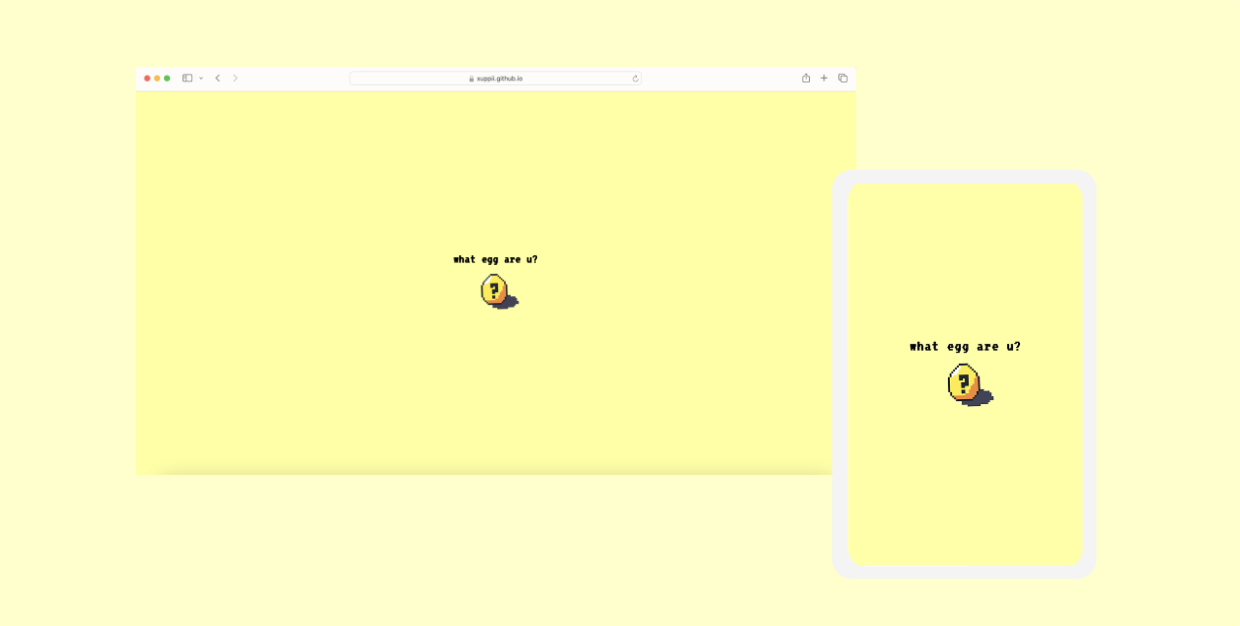
I designed and illustrated a short, narrative-driven personality quiz inspired by MBTI, focused on visual storytelling, clarity, and emotional appeal. The project explores how playful metaphors and concise interactions can create an engaging alternative to traditional personality assessments.
Artist
UI/UX Designer
Storyline Creator
User Research
Data Analysis
Canva
July 2024 – September 2024
User Research
Traditional MBTI quizzes overwhelmed users with length, rigid categorization, and abstract results. Many were skeptical a four-letter type could fully represent them. This informed a goal to design something lightweight, approachable, and emotionally affirming while still feeling personal.
Research Findings
Research showed a growing popularity of short-form, themed personality quizzes, especially among Gen Z users who enjoyed comparing results socially. Users valued quizzes that were visually engaging, quick to complete, and easy to understand.
Concept Interest
80% were interested in the concept of eggs and how they relate to MBTI
Perceived Accuracy
38% weren’t sure if it was an accurate representation of them
Narrative Engagement
76% enjoyed the results and the idea of a storyline rather than a set of questions
Key insight: Users were highly engaged by the narrative format, but questioned accuracy, reinforcing the importance of framing results as playful and affirming rather than definitive.
Design Decisions
- Used a narrative structure instead of direct questions to reduce decision fatigue
- Paired each result with a distinct color palette to reinforce personality traits
- Framed results around positive attributes ("nutrients") to create an affirming experience
- Designed for both mobile and desktop to maximize accessibility
Key challenge: Some questions unintentionally favored logical over emotional responses, which could skew results for Feeling types. As a short quiz, even one atypical answer could significantly alter the outcome — a known limitation that informed how results were framed.
Solution
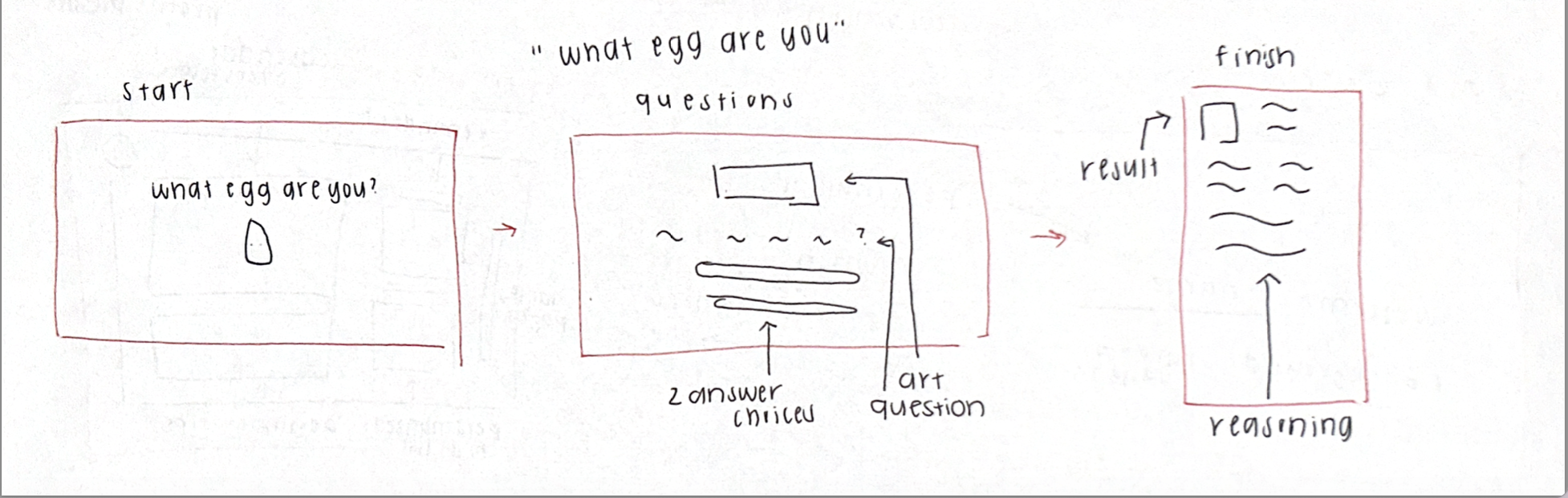
The project followed a straightforward, linear flow from start to finish, allowing users to move through the experience without confusion or friction.
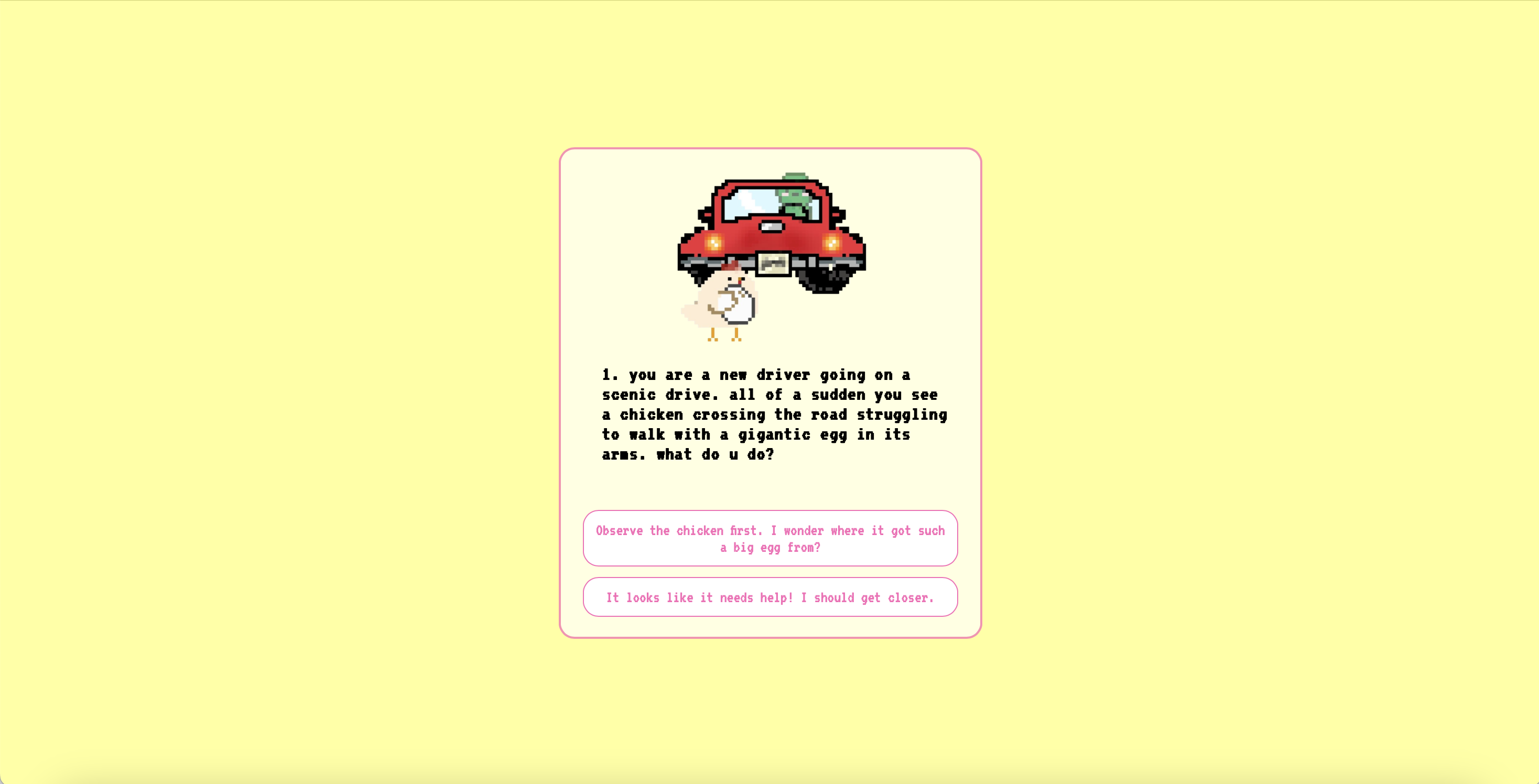
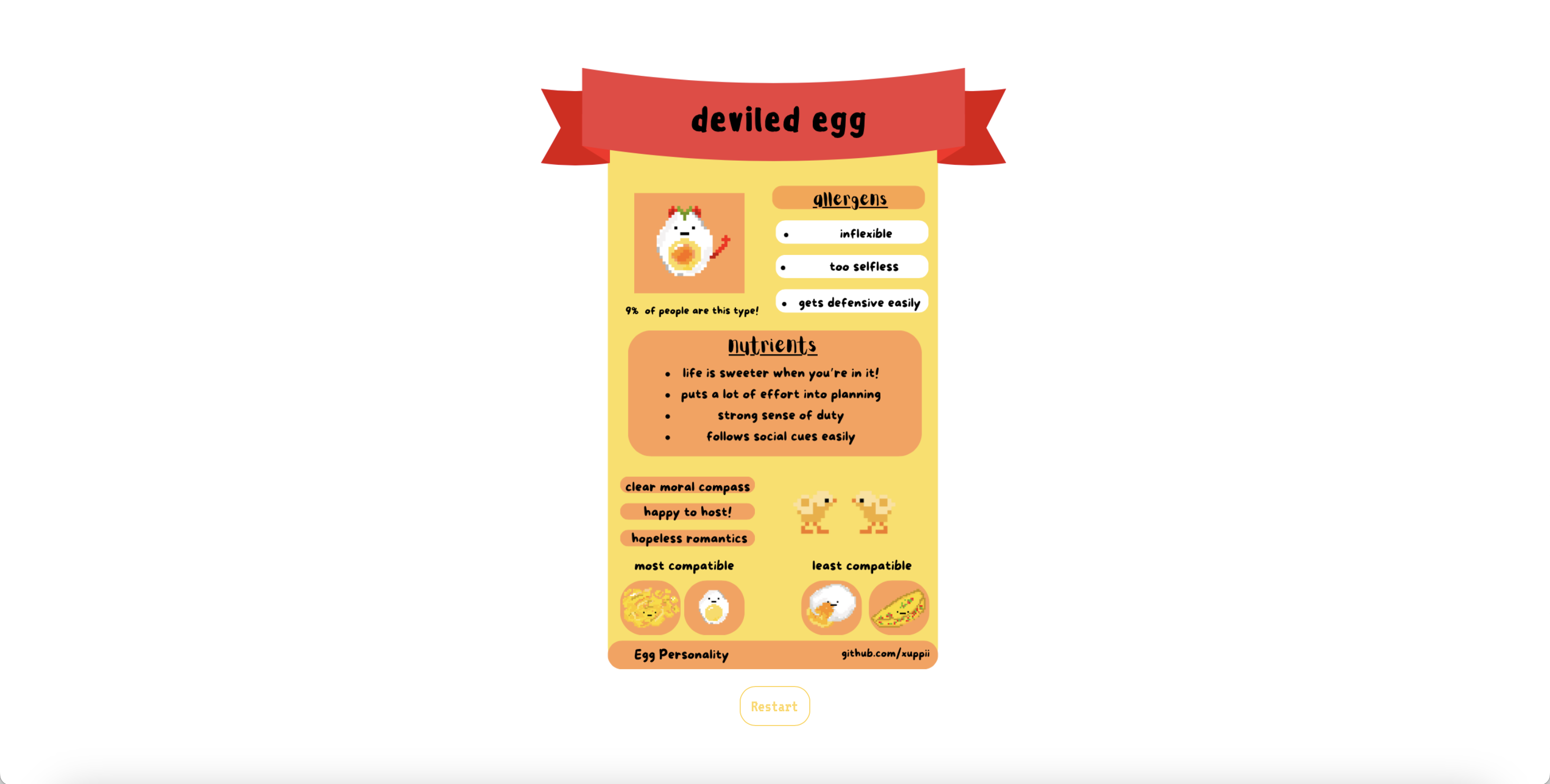
The final quiz followed a linear, frictionless flow from start to finish. Each result featured a custom illustration, a unique color scheme matched to the egg type, and a "nutrients" section highlighting the user's positive traits — deliberately foregrounding strengths over weaknesses since users tend to focus on the negative. The experience was designed to fit both mobile and desktop, making it easy to complete and share regardless of device.
Conclusion
As my first end-to-end personal project, this experience helped solidify my interest in UI/UX design. It allowed me to explore visual storytelling, tone, and emotional design while owning every stage of the process, from illustration to interaction design.
While not designed as a diagnostic tool, the project succeeded in creating a positive, engaging experience that users felt comfortable sharing and discussing.
thank you for reading this case study!